The California Budget Act of 2026 addresses a number of family child care priorities, including expanding subsidized voucher slots and updating policies like the 80/20 rule which previously prevented family child care educators from managing family emergencies or seeking medical care. It also closes corporate tax loopholes to generate tens of billions of dollars for public services.

We welcome the increase in voucher slots but a 2.01% increase to rates that only cover 30% of our current costs is insufficient to meet the moment.

Below is what we know about the Budget Act of 2026 and its impacts on family child care providers.

Still have questions or want to learn more? Join one of our upcoming information sessions via Zoom:

July 15 at 6:30 pm (RSVP here)
July 18 at 10 am (RSVP here)

Provider Pay

2.009% increase on total subsidy payment received, both the Cost of Care Plus payment as well as the RMR rate for providers. 
  • Based on our calculations, the average increase would be around $24.38 per child, per month.
What this means: more families can access affordable child care, and providers and others should see more families paid for by state subsidies seeking care. This is a down payment in the 1.7M families eligible but not yet funded for child care subsidies in California.
  • Effective as of October 2026, adds 22,770 new spaces, or subsidized slots, for families. Of these, 20,700 are vouchers to be used where parents choose, and 2,070 slots will go to centers or FCCHENs.
  • Maintains at least some of the 6,800 voucher spaces targeted for removal in the May Revision of the budget, maintaining more slots for families.
  • Create new opportunities for the State to move unused slots to other agencies to ensure better subsidy utilization. 
  • Some of this funding can be used to add child care facility capacity, if needed.
$10.6M for licensed and license-exempt providers impacted by LA fires in 2025 and $25.7M for providers impacted by disasters in 2023 and 2024 as declared by the state or federal government.
  • The funding can be used for facilities as well as materials and equipment.
Changes the requirement to permit provider absences up to 20% of a month, with qualified staff and provided other provisions are met.
  • Gives CDSS authority to waive additional absences on an individual basis.
  • Will require providers to give prior written notice to families of planned absences and and complete absence reporting to licensing the day after and a week after said absence.
  • Adds initial, one-time preventative health training requirements for assistants and substitutes as a requirement of provider’s licensing, in addition to requiring assistants and substitutes to renew pediatric first aid and pediatric CPR every two years.
  • Adds annual continuing education requirements of at least 12 hours on listed topics for all staff beginning Jan 1, 2027
  • Removes the option to get a provisional license for providers who haven’t completed training requirements.
Families that still have a family fee will have that collected by agencies no later than Jan 1, 2027.
  • Note: there are no changes to co-pays which providers collect if applicable.
There is no funding to implement prospective pay
Unexcused absences of more than 30 days in a year would lead to loss of child care subsidy for a child.
Required for providers regardless of language, even if training isn’t available in the provider’s primary language .

Adds additional requirements for emergency and disaster planning for licensed providers, and requires training for all staff on the plan annually, starting Jan 1, 2027.
The budget contains many changes to the CSPP, administered by the California Department of Education (CDE), primarily intended to increase families’ utilization.

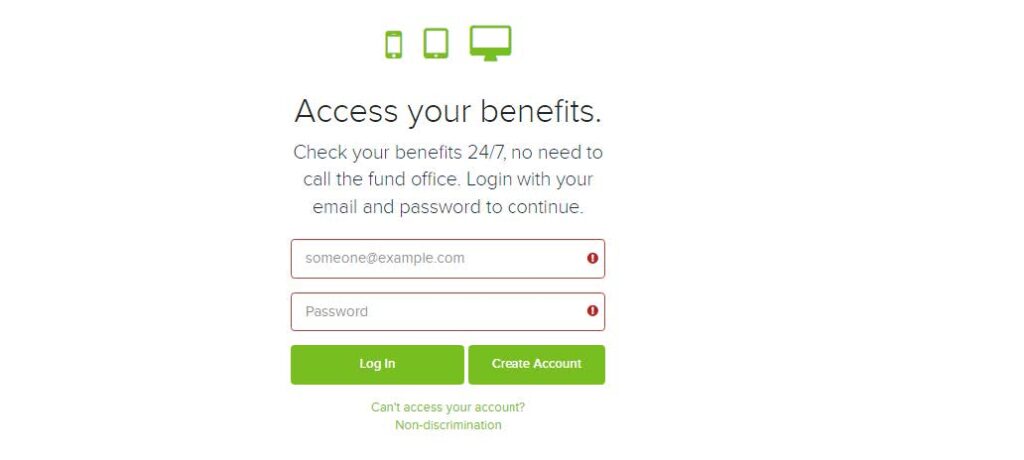
Access your portal

Step 1

Go to portal site.

STEP 2

Click “Create Account.”

step 3

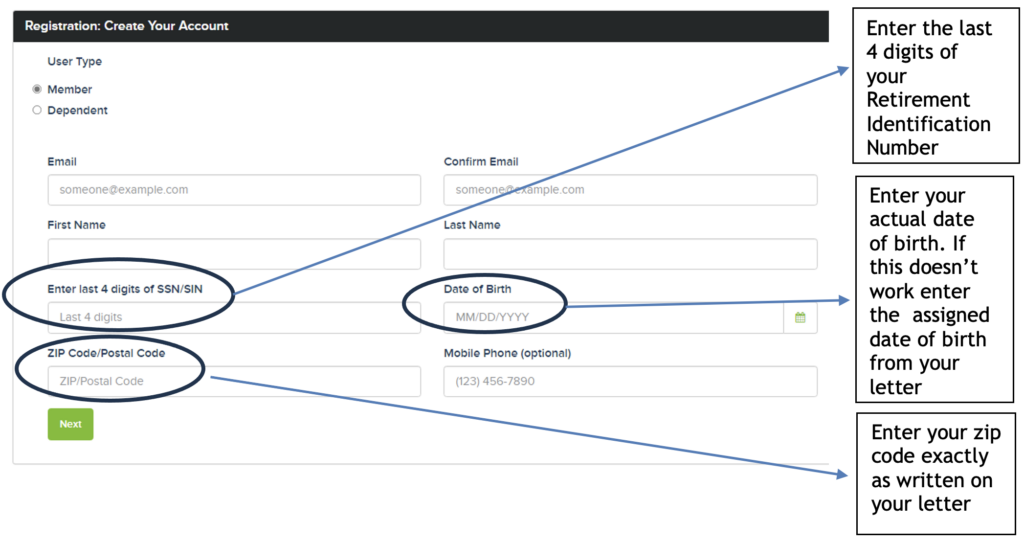
Complete the following fields, using the information provided in the benefits letter you received.

  • User Type: Member
  • Email: Enter your email address and confirm your email
  • First and Last Name: Enter your first and last name
  • SSN/SIN: Enter the last 4 digits of the Retirement Identification Number you received from your benefits letter. Do not enter the last 4 digits of your Social Security number.
  • Date of Birth: Enter your actual date of birth. If this doesn’t work, then enter the temporary date of birth from your benefits letter.
  • Zip Code/Postal Code: Enter the zip code exactly as written on your benefits letter
step 4

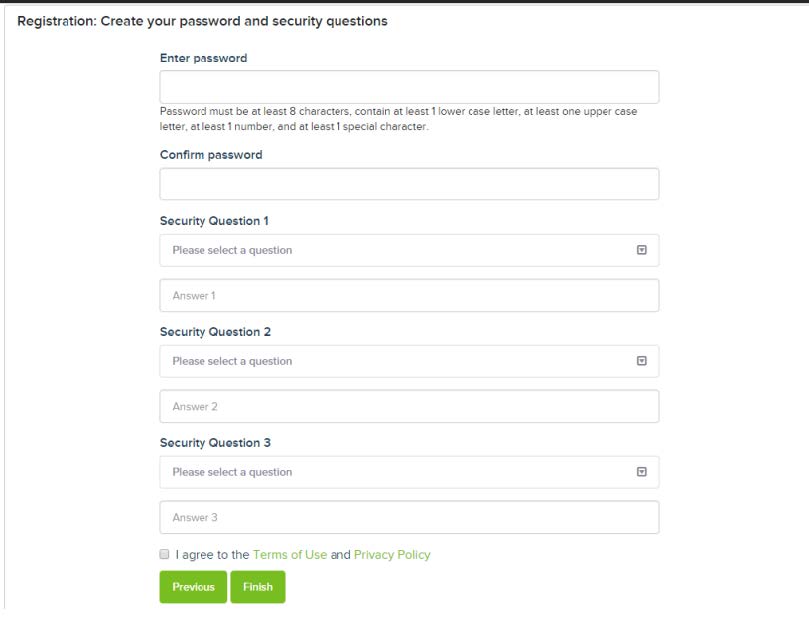
Click “Next” and the following screen displays

Enter the password, and three Security Questions and answers, and select the Terms of Use and Privacy Policy checkbox.

step 5

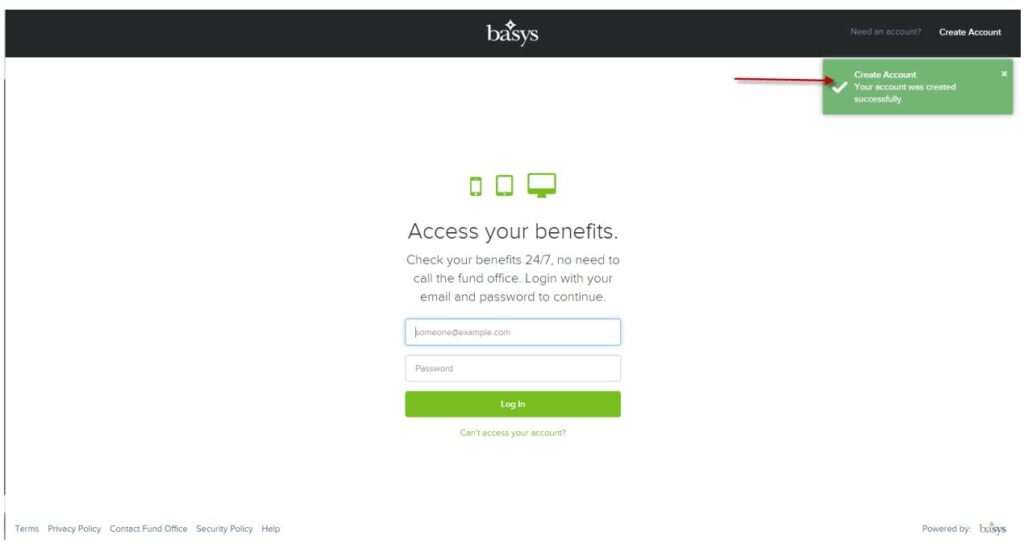
Click Finish, the account is created, and you are returned to the initial screen (see following screen example)

You will also receive an access code which will be sent to the email that you entered when you created your account. Note: Each time you log in from a new computer/device, you must enter a new access code.

step 6

From the initial screen, enter the email address you used to set up your account and password, and click Login

step 7

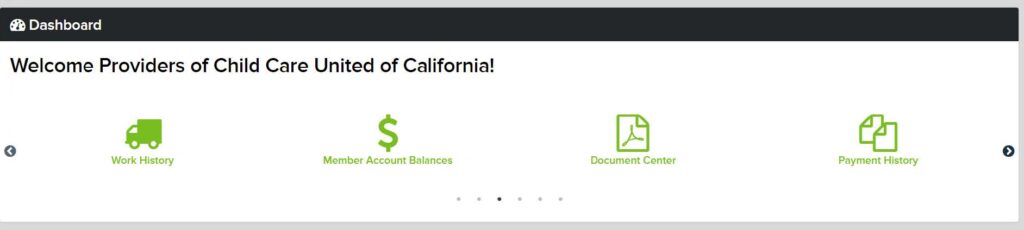
Enter the access code you received in your email to access the Dashboard screen

If you have any questions, or would like assistance registering your portal, call our CCPU Provider Resource Center at (888) 583-CCPU (2278) or PRC@ccpuca.org.

Info Sessions Recordings:

July 9 CCPU Retirement Fund Info Session

July 18 CCPU Retirement Fund Info Session

Frequently Asked Questions

Find answers to common questions in the FAQ section below.

Are the benefits from the Retirement Plan taxable income to me?

The State contributions to your Retirement Plan account are not taxable to you until you receive a distribution. There may be distributions options to defer those taxes.

When can I sign up for the Retirement Fund and where can I learn more?

Eligible providers are automatically enrolled in the retirement fund. However, the administrator, Zenith American Solutions, will ask eligible providers to update necessary information. It is important to provide this information so that your records are accurate, and to avoid delays accessing your account.


If you believe you are eligible, but have not received this mail, you may contact the CCPU Provider Resource Center for assistance at (888) 583-CCPU (2278) or PRC@ccpuca.org.

Have more questions?

If you have additional questions, you can call the CCPU Provider Resource Center at 888-583-CCPU (2278) from 9am to 5pm Monday-Friday or email at PRC@ccpuca.org.

WHAT – What benefits does the Retirement Fund expect to offer providers?

Expand the Retirement Fund Benefits Table to see benefits.

 Plan Rules
Eligible participants*

You are eligible to participate in the Retirement Plan for a 2024 contribution if you are:

  • A licensed child care provider
  • Who has been paid 6 or more months of child subsidy in the 2023 calendar year (can be non-consecutive months).
Eligibility for benefit credit for contributions in 2024*You will earn your full service credits for 2023 if you were paid for ten or more months of child subsidy in 2023. If you were paid for 6 or more months of child subsidy, you will receive 60% of your service credits, 70% for 7 months, 80% for 8 months and 90% for 9 months. You will not earn any service credit if you were paid for less than 6 months.
ContributionsThe only contributions to the Retirement Plan will be paid from funding won through the CCPU collective bargaining agreement. The Plan does not accept contributions from you.
Amount of annual employer contributions for 2024 service allocable to participants in 2025*You will earn one full service credit for the State contribution on your behalf in 2025 if you were paid for ten or more months of child subsidy in 2024. If you were paid for 6 to 9 months in 2024, you will receive a pro-rated service credit. You will not earn any service credit if you were paid for less than 6 months in 2024.
VestingYou are “vested” in any contribution correctly made to your account. You do not need to work a minimum number of years before 2024 to be entitled to a benefit.
Distribution events

You can elect to receive your account when:

  • You stop all work as a licensed provider paid for state subsidized child care for 9 consecutive months at any age (“terminate from service”);
  • You stop all work as a licensed provider paid for state subsidized child care for 3 consecutive months at age 60 or older (“retirement”); or
  • You attain age 73, which is the age you are required to start receiving payments, unless you are still working.
Forms of distributions

If you are age 60 or older and stop all work as a licensed provider for 3 consecutive months and elect to retire, you can choose to receive your account balance as:

  • One lump-sum payment
  • Approximately equal monthly payments for 5 years
  • Approximately equal monthly payments for 10 years

If you are younger than age 60 and stop all work as a licensed provider for 9 consecutive months, you can only elect to receive your account as one lump-sum payment.

Death benefitsSince your account is 100% vested, you can designate a beneficiary (or multiple beneficiaries) to receive your account balance if you die before you receive it.
InvestmentsThe Board of Trustees will manage how the Retirement Plan is invested on your behalf, with the assistance of investment professionals.

*Special rules apply to providers where more than one provider is on the payment record.

who

Who is eligible for the Retirement Fund benefits?

State contributions to the Retirement Plan are tied to the child care subsidy program. To be eligible for retirement benefits in 2024, you must be a licensed provider who has have been paid for work with a subsidized child in at least 6 months in 2023-these months do not need to be consecutive. License exempt providers are not eligible; however, if you become licensed in a year, your work in that year may count for eligibility.

when

When will the benefits be available?

Contributions to the Retirement Plan are tied to the child care subsidy program. To be eligible for retirement benefits in 2024, you must be a licensed provider who has have been paid for work with a subsidized child in at least 6 months in 2023-these months do not need to be consecutive. License exempt providers are not eligible; however, if you become licensed in a year, your work in that year may count for eligibility.

how

How can I get help enrolling?

If you are eligible, the Plan will automatically enroll you based on data received by the State of California. You should immediately update your information with the Plan so it has has all of your current information and you receive credit for your years of licensed work.